 |
 |
 |
||||||||||||
|
||||||||||||
Manned Ornithopters Full History History Archive
Getting Started How to Design & Build Competition Info Design Tools
Design Manual Newsletter Free Plans
Teachers Guide Web Site Links
About the Society Contact Info 
|
|
Getting Started with Ornithopters
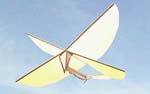
Seeing them fly is amazing, but it is not easy to build an ornithopter. You can improve your chances of success if you start off with a proven design. The simplest ornithopters are powered by winding up a rubber band. These rubber band powered ornithopters are the least expensive to build, and they can be flown indoors. Building and flying these ornithopters is a great way for kids to learn about science and how to work as a team. You can have a competition in the school gym to see who can get the longest flight time.
Building a rubber band powered ornithopter is also the best way for adults to get started with ornithopters. Although the rubber band powered ornithopters may not seem like cutting edge technology, you will learn a lot of things that will help you later on. Beware of any tutorials that show you how to build an ornithopter from "household materials". It's important to use the right materials so your ornithopter will fly. There are some poorly made ornithopter kits on the market. They use a lot of plastic and bamboo in their construction. Using these heavy materials instead of balsa wood makes them fly poorly. Some of these kits are advertised for beginners but are actually frustrating to build. Our Freebird Plans offer a proven design, which will give you a good introduction to building your own ornithopters. We also provide several other designs, for the more advanced builder.
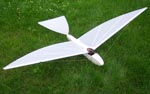
The second type of ornithopter is powered by an electric motor. Electric ornithopters are more difficult to design and build. These ornithopters range from 10 cm wingspan "micro air vehicles" to the size of an eagle. They are often radio controlled, and they can carry payloads such as cameras. The first challenge is constructing a reliable gearbox and flapping mechanism that will provide enough power for your ornithopter to fly. Once you have accomplished that, you will find that getting an ornithopter to steer properly can be just as difficult. As you overcome each of the challenges that your ornithopter can present, you will advance your knowledge of building techniques, electronics, and the principles of flight. Next: How to Design and Build Ornithopters
|
|
|||||||||